‘His gut was telling him he had stumbled on a crime that had something to do with little girls.’
When local police visit an elderly peeping tom, the confiscated photographs of multiple young girls are sent by an intuitive PC Carey to an even more intuitive DI Custer, of the recently formed Paedophile Unit, to investigate. The girls are fully clothed, often posed outside a cinema, but PC Carey feels that something is amiss. After having his attention snagged by a simple photograph of a young girl in a bleak room, sitting on a bed and gazing straight at the camera with beseeching eyes, DI Custer is convinced, too – so convinced that he will devote the next three years of his life to solving what will turn out to be a series of sex crimes, murders and hidden graves.
What’s it about?
In essence, St Aubin de Teran’s focus is on the psychological make-up of the various criminals and their pursuers, DI Custer and Sergeant Jolly Campbell. This isn’t a who-dunnit or a how-dunnit; as the novel continues, the machinations deployed by the paedophiles are clearly outlined, almost gloried in, due to Aubin’s decision to share not just the full biographical history, but the thoughts and feelings of the murderers themselves.
As the story develops, the reader will find themselves waiting eagerly for Custer and Jolly to apprehend all the villains through a combination of investigative police work, ‘unorthodox’ (illegal) approaches from Custer, for whom the ends justify the means (though not in a corrupt manner, merely ignoring correct procedures), and sheer relentless determination. Finally, Custer and Jolly go undercover, placing themselves at increasing risk from a villain who will do anything to cover his tracks.
What’s it like?
The first 150 pages introduce all the main characters, giving each one a fully fleshed out backstory and establishing the events in their lives that made them who they are in the contemporary world of the narrative (which is actually the 1980s) while also establishing the seed of the investigation: despite the dismissal of his colleagues and senior officers, Custer is determined to root out the crime he is certain has been hinted at by the photo.
This depiction of the villains made for rather uncomfortable reading at points, as the perpetrators casually and deliberately commit strings of abuses throughout their lives, using each other’s predilections to further their own disturbing goals, and the third person narration slips into their own language. For instance, at a key point in the narrative, a paedophile ‘despatched his child lover with a fond kiss and a bus fare’. One imagines that Custer, and most readers, would surely use the term ‘child victim’ and argue that ‘inappropriate’ would be more accurate than ‘fond’.
The pace quickens towards the final quarter of the book, where Custer and Jolly are undercover and there is a tangible sense of the net tightening. Will Custer achieve redemption? And will he confess his feelings to Jolly? The latter relationship adds a necessary warmth to the book by gently hinting at the possibility of a mature, healthy relationship, in sharp contrast to the surrounding paedophile conspiracy.
Final thoughts
I found some of St Aubin de Teran’s choices surprising: Jolly’s sympathy towards one of the elderly villains is perhaps partially simply reflective of real life (Jolly worries that, if a case came to trial, a jury may fail to believe in his crimes when faced with his frail and pathetic demeanour, or at least fail to punish him for them) but a visit she pays later in the book suggests she also has real sympathy towards a man who cannot be conceived of as an innocent.
Similarly, St Aubin de Teran’s decision to present the paedophiles as full humans with positive qualities as well as obvious negative ones humanises them in a way some readers may find uncomfortable – but there again, it is a rare human who has no redeeming qualities. If we believe all paedophiles are obvious villains, our naivety will not reward us!
This is a character focused novel that gains urgency in the final pages and creates a largely effective closure. Two key characters are missing in the final pages, but I can understand the omission and enjoyed the reflective final pages, which capture Custer as he prepares for the future.
With the obvious caveat that this may be a difficult read for those who have experienced or been affected by the issues portrayed in the story, I found this an interesting (and sometimes horrifying*) read.
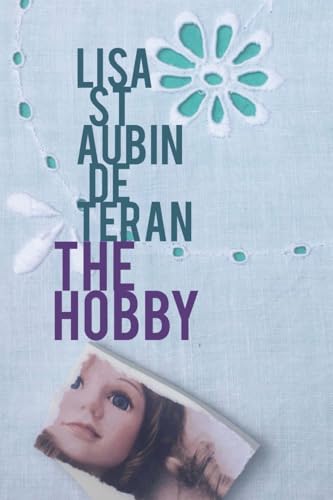
‘The Hobby’,
Lisa St Aubin de Teran,
2024, Amaurea Press, hardback
Many thanks to Amaurea Press for providing me with a free copy of this book in exchange for an honest review.
*I looked up PIE, the Paedophile Information Exchange, and couldn’t quite believe that it was real. *shudders*