Many of us will be familiar with the opening refrain from Philip Larkin’s ‘This Be The Verse’:
‘They f**k you up, your mum and dad.
They may not mean to, but they do.’
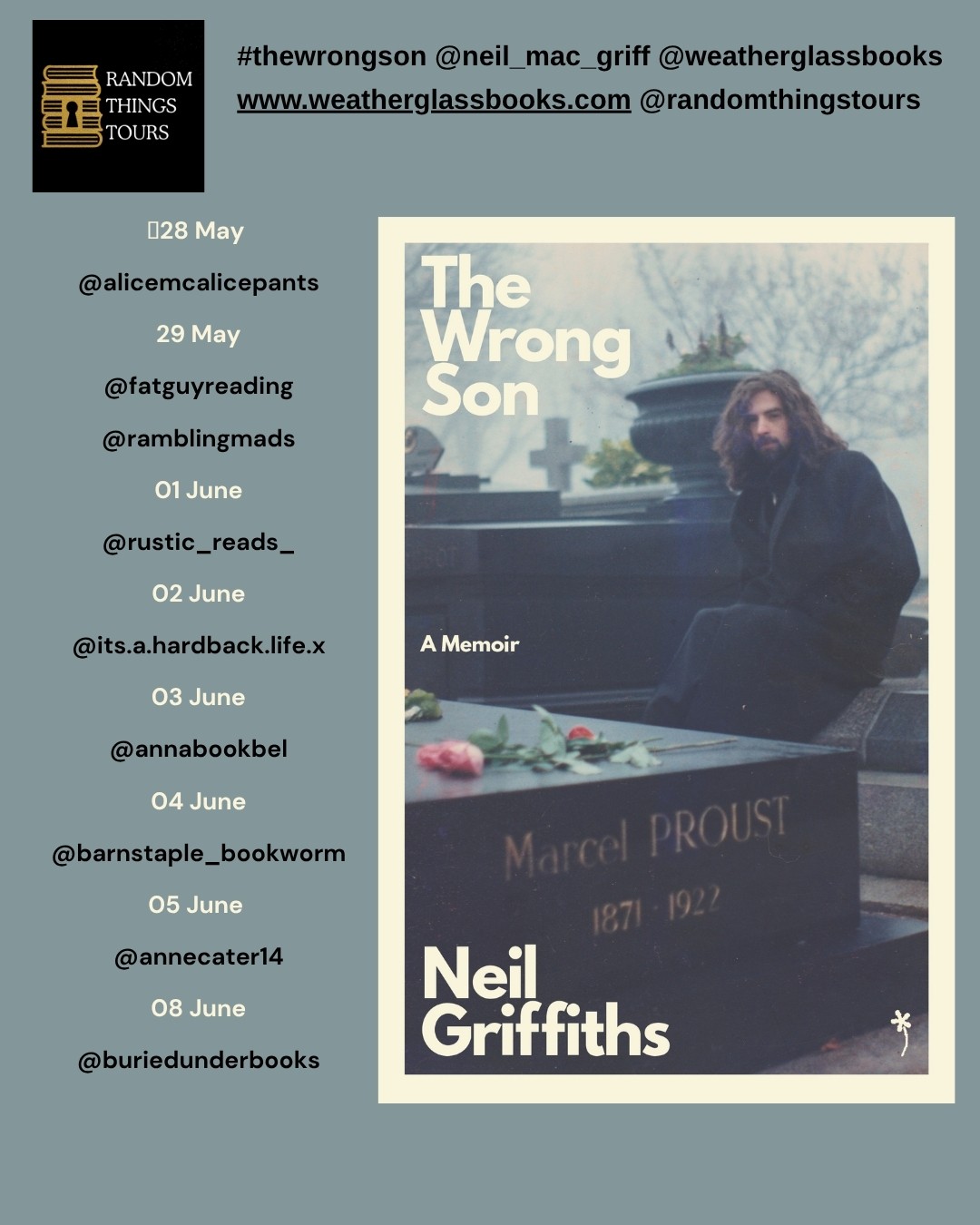
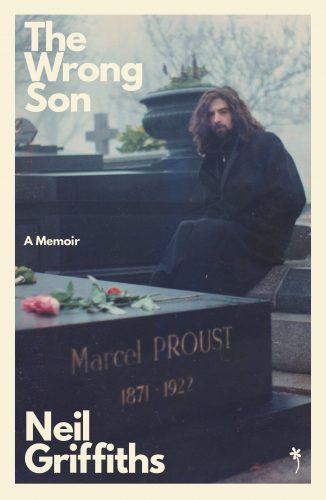
In this insightful and often painful memoir, author Neil Griffiths explores how the very specific circumstances of his birth, upbringing and family dynamics convened to create specific damage to his psyche that only fully revealed itself with the death of his parents and which may never completely heal.
What’s it about?
In this stark and fearless memoir, Neil Griffiths investigates the emotional inheritance passed down through silence and grief, and the lifelong consequences of being the child who should not have existed.
In 1963, a young husband loses his pregnant wife and eighteen-month-old son in a car accident. Six months later, he meets a woman who abandons her own husband and child for him — a man who seems to her everything she has ever wanted. Within two years, a boy is born into this family of grief and guilt: into a house already filled with ghosts, where neither parent can see him clearly through what each has lost. His mother demands perfection. His father, meanwhile, decides early on that this child exists only because the first one died — and cannot forgive him for it.
Moulded by his mother, rejected by his father, he is given no space in which to become himself. Throughout his life, no matter how much he tries to invent himself, he is driven by the fear that nothing real exists underneath. Fifty years on, after his parents’ deaths, that fear begins to unmoor him. He turns to the work of psychoanalysts who were pioneers of early childhood psychology around the time he was born. Drawing on the insights of D.W. Winnicott and Jacques Lacan, The Wrong Son traces a life shaped not only by loss and violence, but by psychic damage that may never fully be shaken off.
With forensic clarity and unexpected humour, The Wrong Son is a quietly devastating work: deeply human, psychologically attuned, and unafraid to stay with what cannot be resolved.
What’s it like?
Brutally honest without being self-pitying, this is a carefully painted portrait of a life lived without a sense of core self. It is only after his father’s death that Griffiths realises how far he had set himself up in opposition to his father – a notion of selfhood that crumbles when his father no longer exists to define itself against.
While adding depth to his personal insights by reflecting on key insights from childhood psychoanalysts, Griffiths also takes care to separate his experience of his father from the experiences of the wider world, creating a deeply complex portrait of a man who caused great damage to his son while enhancing the lives of many other people in his community.
He is also able to reflect on his own foibles in a way that is often amusing, rather than self-flagellating, adding a necessary lightness to what is, in places, a deeply sad account of a wounded child who becomes, in certain aspects, the kind of parent he himself struggled to interact with.
Final thoughts
From the thoughtful opening pages to the last questioning examination of whether his upbringing could ever have been different, ‘The Wrong Son’ is consistently a memoir that encourages the reader to empathise with all involved. I found that elements of Griffiths’ experiences with dissociation reminded me of ‘when nothing feels real’ by Nathan Dunne, a non-fiction account of the journalist’s experiences of depersonalisation (reviewed here).
A powerful memoir that will doubtless encourage readers to reflect on their own relationships with their families and – perhaps – find it in their hearts to recognise the full complexity of family members as human beings in relation to their own experiences.
‘The Wrong Son’,
Neil Griffiths,
2026, Weatherglass books, paperback
Many thanks to the publisher and Anne Cater’s Random Things Tours for providing me with a copy of this book in exchange for an honest review and a spot on the blog tour.
Want to know more? Then why not follow the tour: