Recently I joined two new book groups, because, obviously, my TBR pile wasn’t ridiculous enough.
I love a deadline and not, (to paraphrase Douglas Adams,) because I love the whooshing sound they make as they go by, but because a deadline means that I will actually, definitely, genuinely read the exciting sounding book that I’ve just picked up, as opposed to adding to my shelves and then wondering – months later – how I’ve *not yet managed* to read a book that, in some instances, I pre-ordered because I was so excited about it (‘Red Side Story’ – I’m looking at you here).
A deadline turns reading, otherwise a delightful hobby that gets stuffed into the child-free corners of my life, (so solo bus journeys and the midnight -1am bedtime book slot,) into a valid item on my To Do List. For me, deadlines legitimise sitting down in the middle of the day, cup of tea by my side, and reading something that isn’t a recipe or school newsletter. (Obviously, applying deadlines to hobbies can also have adverse consequences: some books are best enjoyed in small doses, a chapter at a time, rather than gorged in two lengthy sittings because I need to lead a discussion on this author, and it isn’t always possible to identify these books before I start reading them three days prior to the meeting…)
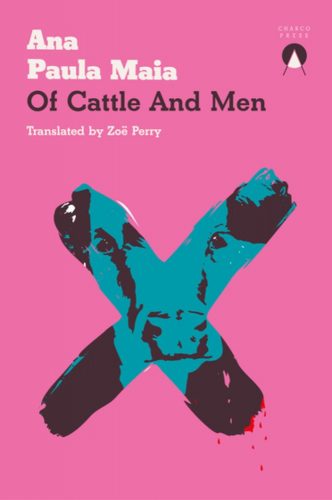
The other joy of book groups is that they will introduce you to writers you might never otherwise have found, especially if you attend a book group where the lovely co-ordinator deliberately promotes books from independent publishing houses as well as more well-known offerings from the Big Five (thank you, Alex). This is how I found ‘Of Cattle and Men’, a slim novella that I heartily recommend to anyone who cares about how their food is produced. I don’t mean this in a preachy, evangelical way – Maia doesn’t preach, but she does open readers’ eyes to realities they may not have considered.
What’s it about?
In a ‘desolate corner of Brazil’, Edgar Wilson works at a slaughterhouse, stunning the cattle before dispatching them, quietly, repeatedly, relentlessly. While he prides himself on a job well done, not everyone who works at the slaughterhouse is similarly concerned with animal welfare. Edgar Wilson thinks it is especially important to calm the cows now, as recently they have started to behave rather oddly, running into walls and over cliffs, almost as if they have been driven mad or are being hunted, leaving death of their choosing as the only possible escape.
What’s it like?
Blunt. Brutal. Honest.
‘Somebody’s got to do the dirty work. Other people’s dirty work. Nobody wants to do that sort of thing. That’s why God put guys like you and me on this earth.’
In the world of the slaughterhouse, a man’s death cannot be allowed to interrupt the smooth running of the timetable, but the deaths Maia depicts cannot help but disrupt our sterile vision of meat as packaged cuts and animals as purely fuel.
Increasingly disturbing, as nature withers and dies, this is a story packed with small moments that, quietly, intently, feed the sense of horror at the darkness of the world these men inhabit.
Final thoughts
This is a powerful window into a self-contained world in which there are no easy answers to moral questions – murder, it seems, may be a reasonable response to a bad man, even if that man is little more than a boy. Indeed, it’s clear that the slaughter of cattle to create meat tarnishes everyone involved in the process – just as Edgar Wilson feels it should. Ultimately, ‘no one goes unpunished’.